


It is often amusing when people attempt to dictate a fixed set of qualities that one must possess to be considered a great leader. I believe deeply in diversity, and I hold that not all men are the same, we are naturally diverse—physically, spiritually, mentally, in personality, attitude, and in many other ways. Leadership, therefore, cannot be reduced to a single temperament or behavioral template.
Over the past few months, I have grown increasingly concerned about a misconception that many Ghanaians appear to have developed regarding the kind of personality and temperament one must possess to become president. This misconception is troubling, particularly because it is being reinforced rather than corrected. Key stakeholders—political analysts, civil society actors, and opinion leaders—ought to be educating the public more effectively. Instead, many simply observe as the public becomes mis-educated and misinformed, reacting emotionally and impulsively rather than approaching national issues with analytical reasoning.
This problem is evident in the way certain arguments are framed in the media and other public platforms, especially attempts to portray Honorable Kennedy Agyapong as unfit for the presidency solely because of his personality. I find this line of reasoning troubling and largely nonsensical. While everyone is entitled to their opinion, it is critical that such discussions are grounded in thoughtful analysis rather than personal bias or emotional reaction.
For clarity, this analysis is not presented on behalf of any political group or affiliation. I speak solely for myself, and my intention is not to promote any individual, but to challenge the flawed assumption that leadership effectiveness is tied to a narrow definition of temperament.
Personalities and Temperament of Former Ghanaian Presidents
To place this discussion in proper context, it is useful to examine the personalities and temperaments of Ghana’s former presidents since the country became a constitutional republic in 1992. The assessments below reflect my personal observations, though I believe many readers will recognize these traits as broadly consistent with public perception.

Jerry John Rawlings governed with intensity and moral certainty. His temperament was fiery, confrontational, and deeply uncompromising. He viewed leadership as a corrective force against corruption and elite excess, and he believed that fear, moral pressure, and public discipline were legitimate tools of governance. This personality was appropriate for his time.
Charismatic and populist, Rawlings inspired devotion and relied heavily on personal authority rather than institutions, maintaining a revolutionary mindset even during civilian rule. Highly emotional and instinctive, he distrusted elites and preferred command over consensus. While this made him decisive and commanding, it also left little room for dissent and weakened institutional independence.
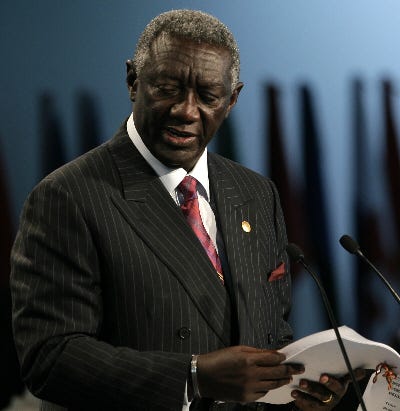
John Agyekum Kufuor was a sharp contrast. Calm, diplomatic, and conciliatory, Kufuor believed democracy functioned best when leaders exercised restraint. He favored dialogue, negotiation, and institutional processes over confrontation.
Soft-spoken and urbane, he trusted systems and delegated authority to advisers. Critics often interpreted his patience and optimism as weakness or detachment, particularly during crises. Supporters, however, viewed his leadership as stabilizing, mature, and respectful of democratic norms. His presidency emphasized institutional growth, international diplomacy, and consensus-building rather than emotional politics.
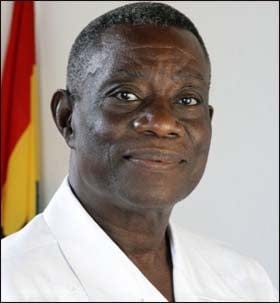
John Evans Atta Mills was perhaps the most introspective and reserved of Ghana’s presidents in the Fourth Republic. A scholar by disposition, his temperament was reflective, gentle, and conflict-averse. He governed with strong personal ethics and placed a high premium on peace, humility, and moral restraint.
Mills avoided political drama and resisted pressure from hardliners, even within his own party. He disliked harsh rhetoric and public confrontation, preferring quiet governance guided by conscience. While this earned him respect for integrity and civility, it also attracted criticism for indecision and weak political control. His leadership prioritized harmony over aggression and restraint over dominance.

John Dramani Mahama’s temperament is pragmatic, adaptive, and emotionally steady. Unlike Rawlings’ moral intensity or Mills’ gentleness, Mahama approaches leadership as a realist and manager of political complexity. He is flexible, transactional, and comfortable with compromise.
Mahama governs by building broad coalitions and navigating constraints rather than dramatizing conflict. He is less ideological and less confrontational, preferring accommodation to rigid positions. Critics view this flexibility as a lack of firmness or ideological clarity, while supporters see it as maturity and political endurance.

Nana Addo Dankwa Akufo-Addo is driven by strong convictions and a deep belief in his historical mission. Ideological and confident, his temperament is firm and often inflexible. He places great emphasis on ideas, constitutionalism, and legacy, sometimes at the expense of emotional connection with the public.
Akufo-Addo governs with a sense of destiny and is willing to endure unpopularity if he believes his position is morally or intellectually correct. While this provides ideological clarity and vision, it has also been criticized for rigidity, elitism, and emotional distance from everyday hardship. He is persuasive, but not instinctively responsive to public pressure.
Taken together, Ghana’s presidents demonstrate that there is no single personality type that defines effective leadership. Fiery leaders have governed, just as gentle scholars, pragmatic managers, and rigid ideologues have done. All of these leaders experienced both successes and failures, yet each left behind a distinct legacy.
Ghana is not unique in this regard. The United States offers a similar illustration. It has produced presidents and heads of state with vastly different personalities and temperaments, all of whom left their imprint on the nation. Consider the sharp contrast between leaders such as Barack Obama and Joe Biden on one hand, and Donald Trump and George W. Bush on the other. Despite their differences, each governed in accordance with who they were, not by attempting to imitate another personality type. Their achievements and failures alike flowed from their authentic selves. It is my personal belief that societies derive the best results from leaders when those leaders are allowed to be their best and most authentic selves.
Let Ken Be Ken

In the current era of Ghanaian politics, public frustration is widespread. Citizens routinely express anger over corruption, misappropriation of public funds, unemployment, economic hardship, and weak accountability. The critical question, therefore, is not whether a candidate fits a preferred personality type, but whether the individual being elected possesses the competence, skills, vision, and goodwill required to confront these challenges. These are the serious questions that matter. Far less useful is the propagandist habit of attacking a person’s personality as a way of disqualifying them, rather than assessing how that personality might be applied—constructively—in pursuit of national objectives.
I see Hon Kennedy Agyapong to have the fit of the likes of Rawlings, Nkrumah and Trump. Like Rawlings and Trump, Kennedy Agyapong is defined by raw emotional intensity. He is confrontational by instinct and speaks without filters. Unlike polished or carefully scripted politicians, he confronts conflict with strong outrage, presenting himself as the individual willing He is deeply opposed to hypocrisy, instinctively suspicious of elite consensus, and inclined to view compromise as moral weakness. His temperament is not conciliatory but corrective and punitive. Rather than relying primarily on quiet institutional processes, he favors exposure, naming and shaming, and the application of public pressure as tools of accountability.
Like Rawlings, he approaches governance through the lens of righteousness versus corruption, believing that moral pressure and public exposure are legitimate instruments of political enforcement. Rawlings targeted the “kalabule” elite of his era; Kennedy targets what he describes as hypocritical politicians, judges, and business figures. The targets differ, but the underlying instinct remains the same.
Like Nkrumah and Trump, Kennedy Agyapong commands strong street-level populist appeal, particularly among young people who feel ignored or betrayed by what they perceive as overly cautious or “soft-spoken” leadership. His blunt authenticity energizes disengaged citizens and fuels a sense of urgency to act decisively. He articulates a vision of industrializing Ghana and expanding employment opportunities—an outlook clearly shaped by his background as a businessman and industrialist. He connects with the frustrations and aspirations of the youth and approaches national development from a business and industrialization perspective. Achieving this vision, however, requires Kennedy Agyapong remaining true to his God-given personality rather than diluting it to fit elite expectations.
I dare say that some years ago, some may argue that individuals such as Ken Ofori-Atta possess the “ideal” presidential temperament—calm, collected, Christian, intellectually refined, emotionally controlled, and soft-spoken. He famously read national budgets while quoting the Apostle Paul, embodying what many would describe as respectable and presidential decorum. Yet, despite these polished traits, this same figure has, over the past eight years, been accused of presiding over the misappropriation and alleged mismanagement of billions of dollars, leaving more than 35 million citizens bearing the consequences. He is now reportedly evading accountability. This reality challenges the simplistic assumption that refined personality traits automatically translate into ethical or effective leadership.
Former minister and NPP Member of Parliament, Samuel Atta Akyea, recently remarked, “I feel Kennedy Agyapong will beat some of his cabinet members as president. His temperament scares me”. Coming from a colleague within the same party, this statement is revealing. It suggests an awareness that Kennedy Agyapong would be intolerant of corruption, indiscipline, and misappropriation. Those who know him understand that he would not permit the comfortable, unchecked misconduct that thrives under pliable leadership. They know he is difficult to control, unwilling to look the other way, and unafraid to call out wrongdoing—even within his own party, as he has done in the past.

Similarly, Ghanaian lawyer and activist Oliver Barker-Vormawor, reacting to a recent campaign by Adwoa Sarfo intended to damage Kennedy Agyapong’s image, posed a pointed question to Ghanaians: “Adwoa Sarfo says Kennedy Agyapong is so principled that he would not appoint family members into government. Isn’t that a good thing?” This question deserves serious reflection. Is it not desirable to have a leader so principled that even close associates and family believe he would not engage in favoritism? Have Ghanaians not grown weary of nepotism and cronyism—practices that became deeply entrenched under the recent Akufo-Addo family and friends administration and whose consequences the nation continues to endure?
If Ghanaians are truly fed up with corruption, misappropriation, and elite impunity, then one must ask whether this is not precisely the type of leadership they claim to want. Yet many appear willing to embrace propaganda that demonizes a leader’s personality simply because it cannot be easily manipulated or controlled. At times, it seems as though Ghanaians are not merely victims of poor governance, but passive participants in its continuation.
I will entreat Hon Kennedy Agyapong to be himself and leverage his personality to lead better.
Are Ghanaian youth not mass migrating from a country governed under John Mahama’s relatively pragmatic and restrained temperament, only to seek livelihoods under the far more aggressive temperament and personality of Donald Trump in the United States? This reality alone suggests that people are not primarily driven by a leader’s temperament or personality. What they seek, above all else, is an economy that allows them to survive, progress, and secure a future.
For this reason, I would urge Honorable Kennedy Agyapong to remain true to himself and to leverage his personality more effectively rather than suppress it. Ultimately, citizens need a leader with a clear vision to solve pressing national problems, maintain public accountability, and improve living standards. Personality matters only to the extent that it serves these outcomes.
Unfortunately, the media often finds it easier to sell sensational narratives by amplifying the perceived flaws of individuals with strong reputations, conditioning the public to believe that a particular personality type is inherently unfit for leadership. This kind of narrative framing is both misleading and harmful to democratic choice.
It is therefore worth stating clearly that, based on my observations from a distance, Kennedy Agyapong—though imperfect, like all human beings—is a man of integrity, honor, and discipline. He is a responsible father and family man, a tireless worker, and a committed patriot. Beyond rhetoric, his actions demonstrate a consistent pattern of generosity and public-spiritedness.
I have observed his charitable impact extend across his family, hometown, constituency, region, and the nation at large. He has personally paid school fees for thousands of young Ghanaians, covered medical bills for many in need, and funded significant health and educational initiatives. Notably, he financed the construction of a multimillion-dollar cardiothoracic center in Ghana and has donated substantial resources to strengthen healthcare and educational infrastructure. Through these actions, he has influenced countless lives in meaningful and positive ways.
In light of this record, the claim that such a person lacks the “right personality” to be president deserves serious reconsideration. Leadership is not about conforming to a prescribed temperament; it is about results, accountability, and impact.
Ken, be yourself.