


Let me tell you a story of Kunta Kinte— one you may already know, but one worth retelling for those who do not. If you haven’t read Alex Haley’s 1976 novel Roots: The Saga of an American Family, you may want to read it to get the details.
Kunta Kinte was a young Mandinka man from The Gambia, born around the mid-18th century. He was captured by slave traders around 1767, taken to America, and sold into slavery in Maryland. He was about 17 years old when he was captured/kidnapped while collecting wood near his village of Juffure. Slave traders seized him, chained him, and forced him onto a ship bound for the Americas — part of the transatlantic slave trade.
The journey, called the Middle Passage, was brutal and horrific. Enslaved Africans were packed tightly below deck, starved, beaten, and many died before reaching shore. Kunta survived — but his freedom and identity were violently stripped away like enslaved Africans before him and after him. When he arrived in Annapolis, Maryland, Kunta was sold to a white plantation owner named John Waller. On the plantation, enslaved Africans were given new, “Christian” names to erase their African identities — a practice meant to break their spirit and link them to their enslavers’ world.
This is the most iconic and heartbreaking part of Kunta Kinte’s story. Watch a short excerpt of the scene below in the 1997 TV Mini Series, Roots.
⚠️ ⚠️ ⚠️ Content Warning⚠️⚠️ ⚠️
The following clip contains scenes of racial violence and brutality depicting the enslavement of Africans. Viewer discretion is strongly advised. This scene is shown for historical and educational purposes, to illustrate the cruelty of slavery and the resilience of those who resisted cultural erasure.
When Waller’s overseer tried to rename him “Toby”, Kunta refused to accept it. He insisted, proudly:
“My name is Kunta Kinte.”
The overseer, furious at his resistance, had Kunta tied to a post and whipped brutally. Each time the whip lashed his back, the overseer demanded,
“What’s your name?”
and each time, bleeding and in pain, Kunta answered,
“Kunta Kinte!”
The punishment continued for weeks until, exhausted and near death, Kunta finally whispered the name “Toby” — not out of surrender, but survival. That moment symbolized the violent erasure of African identity under slavery, and yet, his defiance became a symbol of cultural endurance — a refusal to be fully broken.
Watching that scene is painful — and it should be. I share this clip not for its brutality, but to remind us of what it means to resist even when the world tries to erase who you are. It urges us to confront the reality that names, language, and heritage are not just symbols — they are the essence of true identity.
Kunta Kinte’s story represents the struggle of millions of Africans who were enslaved — stripped of names, languages, and traditions — yet whose descendants still carry echoes of that lost heritage.
In many African and African diaspora cultures, a name is sacred. It carries ancestry, destiny, and identity. So when Kunta Kinte was whipped until he said “Toby,” it wasn’t just a man being beaten — it was a culture being attacked.
The Question of Identity
The question is this: is your African identity — your name — under attack?
Of course, it is.
I am yet to meet a white European, Arab or Asian, no matter where they live, who bears an African name. Naming is not a casual act — it ensures the continuation of heritage and the remembrance of one’s bloodline. It is the thread that connects generations, the bridge between past and present.
Yet it is heartbreaking that most Africans have abandoned the names of their forefathers — those who initiated their bloodline and stood up for their rights — and instead have taken on the strange names of their colonizers. I dare say, our ancestors must be turning in their graves, bitter that we proudly bear the names of the very people they fought against for our freedom and survival, while neglecting theirs.
Growing up in Ghana — and I believe this is true across almost all African countries — anytime a student introduced himself in school, he would often be asked, “What is your English name?” In churches or mosques, one is/was expected to take on an English/Christian/Biblical or Arab/Islam/Quran name to be accepted as “born again.”
So people adopted names like John, Mary, or Mohammed, Amina — and those without foreign names were often mocked or seen as uncivilized. This colonized mindset must be broken. It created the impression that anyone without a colonial name was barbaric or backward — a lie planted deep into our collective consciousness.
One of the strategies used by religious groups to push this agenda was to demonize African naming systems. Foreign religions, including Islam and Christianity, gave new names to converts as a sign of a “new covenant” — supposedly marking salvation and holiness. Our fathers were made to believe that they had to abandon their old names — the names of their ancestors — because they were branded “idolatrous.” Watch this short comedy video below from Concert Party show in Ghana. Though funny it shows a pastor suggesting colonial names to Bob Santo after his baptism and conversion to colonial religion.
What a devastating strategy to erase a culture, a heritage, and a long-standing identity — all in the name of control, power, and authority. This mindset breeds inferiority. It makes us view our traditions as primitive while glorifying Western conventions as modern and superior.
I may not have official statistics to prove this, but from my experience in Africa, I can confidently say that if a national survey were conducted today, over 80% of Ghanaians would bear foreign names.
The Lesson of Heritage Africa
Two years ago, a close friend I was visiting in Virginia — knowing my love for history and African culture — introduced me to a 1989 film titled Heritage Africa.
The message of that movie struck me deeply: cultural and mental bondage can be far more damaging than physical colonial rule. It emphasizes the need to reclaim one’s African identity and heritage as a means to overcome the lingering legacy of colonialism.
The story follows Quincy Arthur Bosomfield — originally Kwesi Atta Bosomefi.
Kwesi changed his name to an English one to better fit into the colonial system and advance his career. He believed that abandoning his African name would make him more “respectable” and help him climb the ranks of the colonial administration.
His transformation from Kwesi Atta Bosomefi (Kwesi → Quincy, Atta → Arthur, Bosomefi → Bosomfield) shows how deeply colonial psychology penetrated the African soul. He rejected his heritage and identity just to conform to a system designed to erase him.
And the sad reality is — this still happens today.
The Cycle Continues
I have seen expecting parents spend hours searching for the most “beautiful” Western, Arab or foreign names for their unborn children. And I will confess — I have been a victim of this too.
Like many of you reading this, I bear an foreign name. My children do as well. Not because I understood the implications — but simply because I was following the norm, unaware of what it truly meant.
This level of mental colonization runs deep — not just among individuals or families, but across entire African nations. We live in countries where streets, public buildings, and national monuments proudly bear foreign names. In Ghana and other African nations, for instance, we have Oxford Street, Liverpool Road, George Walker Bush Street, Victoria Falls, and many more.
So when I saw President Ibrahim Traoré of Burkina Faso — a true Pan-African leader — begin renaming streets that once honored French colonizers, replacing them with the names of African heroes and ancestors, I was filled with pride. That is leadership rooted in identity.
When Others Reclaim Theirs
Recently, Turkey officially changed its international name to Türkiye, to better represent its culture, civilization, and values — and to distance itself from the English word “turkey,” which carried negative connotations.
The country has referred to itself as Türkiye since 1923, but it wasn’t until recently that the government formally requested international bodies, including the UN, to recognize it. This change was not cosmetic — it was symbolic of national pride and self-definition.
Yet here we are, still calling ourselves “Africans”, carrying the name given to us by Scipio Africanus — a Roman general who conquered and exploited parts of our continent, leaving his name as a mark of ownership. Most of our countries, cities, towns, and villages still bear colonial names. It is disheartening that many of our leaders seem comfortable living under the shadows of colonization instead of asserting who we truly are.
Who Is to Blame?
No child born to this world had a choice or say in what or how he was called. So who bears the responsibility for protecting our cultural identity? Leadership.
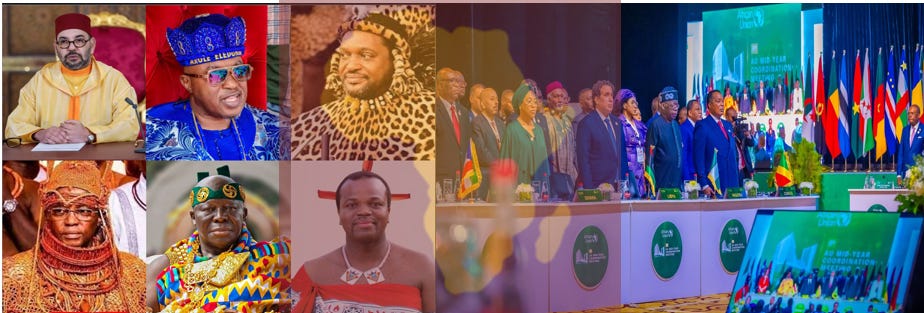
In traditional African society, culture always had custodians — our Chiefs and Kings — entrusted with preserving the heritage and identity of their people.
But under the long shadow of colonial influence, many of these custodians have failed in that duty. Whether through ignorance, complacency, or corruption, they have allowed our identity to be eroded before their very eyes.
Could it be that they, too, have become more colonized than the people they lead?
There are two ways any traditional or political leader might respond to what I am writing. They could take offense — viewing it as an attack on their reputation or intelligence. Or they could see it as a call to awareness — a reminder of the oath they took to protect the dignity and cultural identity of their people. I sincerely hope they choose the latter.
The Call to Reclaim African Identity
I am not writing this article merely to criticize. I am writing to awaken the African — wherever we are — to a sense of awareness about who we are and the power we hold when we reclaim our true identity.
We must free ourselves from this stolen identity and rediscover our worth as a people. And I hope this article will stir both political and cultural leaders to rise to their responsibility — to defend and promote our heritage, and to restore trust and pride in our culture.
I do not yet know how this awakening will fully happen, but I believe it begins with simple, deliberate steps. We can start by reforming our educational systems, by launching public campaigns that celebrate our ancestors, and by teaching our children the true meaning of their names.
I do not know when Africa will finally reach that point where we can all stand proud of who we are — but understanding our past and how we arrived here is the first step.
The second is having the will and desire to change — even if it begins with small steps. Because every time we reclaim a name, we reclaim a piece of our identity. And when we reclaim our identity, we reclaim our power.