


Who Am I? Perhaps this is the most important question a person can ever ask himself. I believe that no one can truly find rest until they have a deep understanding of who they are. So take a moment to think: Who are you?
If several people were asked this question, each might answer differently. People would describe different components of who they are, meaning that who you are encompasses many things. Some would mention their name, where they come from, their favorite food, culture, clothing, or the songs they love. In fact, one might conclude that the best way to describe oneself is through culture — one’s way of life.
Ultimately, answering this question comes down to identifying one thing: your identity. A person is lost without it. If you do not know who you are, you cannot know who you are meant to become. If you do not know who you are, you may not even recognize what you are entitled to in life. Every human being belongs somewhere, and not knowing where you belong makes you vulnerable and easily controlled. That is the power of identity and self-awareness.
Because identity is so crucial, your enemy will use any means possible to strip it from you. Once that happens, they gain control and dominance over you. It’s that simple.
For over 500 years, Africans — or Black people — have endured unimaginable hardship through slavery and colonization. Though this remains the longest period of enslavement and colonization in human history, it is not the first. But what lessons can we learn from earlier examples — especially if we’ve learned nothing of our own, the most recent and devastating one?
Let us look at an incident recorded in the Bible, describing the colonization of ancient Israelites by the Assyrians and Babylonians. In the Book of Daniel 1:3–7, we read that when King Nebuchadnezzar II conquered Jerusalem around 586 BC, he took many Israelites into exile:
Then the king ordered Ashpenaz, chief of his court officials, to bring into the king’s service some of the Israelites from the royal family and nobility — young men without physical defects, handsome, intelligent, quick to understand, and qualified to serve in the king’s palace. He was to teach them the language and literature of the Babylonians. The king assigned them a daily amount of food and wine from the king’s table. They were to be trained for three years, and after that they would enter the king’s service. Among those chosen were Daniel, Hananiah, Mishael, and Azariah. The chief official gave them new names: to Daniel, Belteshazzar; to Hananiah, Shadrach; to Mishael, Meshach; and to Azariah, Abednego.
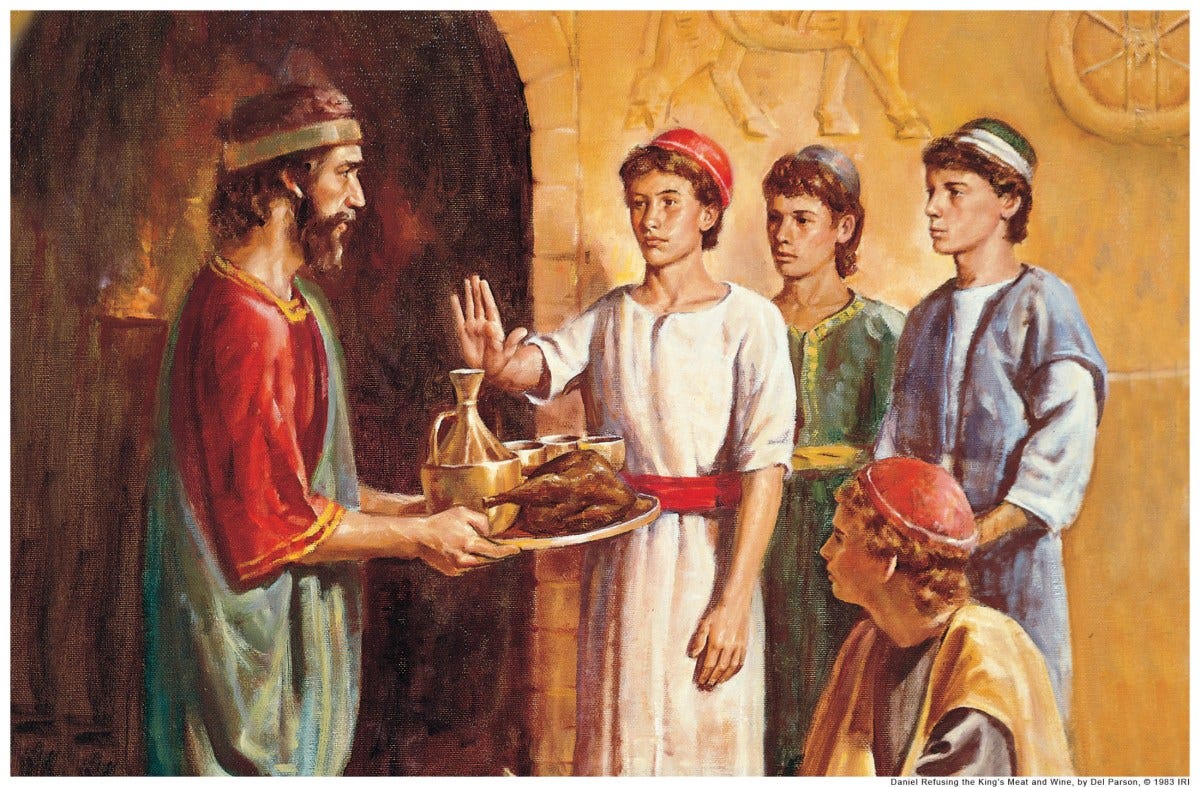
Many Christians may have read this passage but never considered its deeper implications.
Nebuchadnezzar took the best and brightest young Israelites — educated them in the Babylonian language and literature (erasing their Hebrew heritage), fed them royal food and wine (enforcing foreign customs and diet), and gave them new names (changing their identity). This process erased their Hebrew heritage and replaced it with Babylonian identity (replacing their Hebrew names which honored their Hebrew gods and ancestors with names honoring Babylonian gods and ancestors). Their Hebrew names, which honored Yahweh, were changed to names honoring Babylonian gods:
Daniel (“God is my Judge”) → Belteshazzar (honoring Bel, a Babylonian deity)
Hananiah (“The Lord is gracious”) → Shadrach (possibly “command of Aku,” the moon god)
Mishael (“Who is like God?”) → Meshach (“Who is like Aku?”)
Azariah (“The Lord helps”) → Abednego (“servant of Nebo”)
Do you see what the Babylonians were doing? This was cultural indoctrination — what we might today call brainwashing. It was a deliberate attempt to erase their original identity and assimilate them into a foreign culture — a form of cultural colonization.
When Babylon conquered Judah, they didn’t just want land or labor — they wanted loyalty. They understood that to control a people permanently, you don’t need chains; you just need to change their minds.
Slavery was meant to be temporary. Colonization was designed to be permanent.
The enslavers targeted the youth — the most promising, intelligent, and impressionable. They re-educated them in foreign science, literature, and religion. They renamed them, tied their identities to foreign gods, fed them foreign food, and trained them to serve the empire. Babylon didn’t destroy Israel’s culture — it replaced it. They colonized not just the land, but the minds and souls of the people.
Now pause for a moment. If you think I am here to preach, then you’ve missed the point. The question you should be asking yourself is this:
Has the playbook of colonization changed?
If not, after centuries of slavery and colonization, how has African culture and identity been attacked? Are we still being controlled — permanently — by former slave masters? Have we been stripped of our true identity? Do we truly know who we are, or have we been living under a false identity imposed on us by foreign colonizers?
Has there been a conscious and ongoing effort to attack our traditional religions?
Has there been a conscious and ongoing effort to erase our names?
Has there been a conscious and ongoing effort to erase or lifestyle?
Has there been a conscious and ongoing effort to erase our language?
Has there been a conscious and ongoing effort to erase our leadership systems?
It is extremely sad how African leadership has failed its youth in almost every aspect of life. African politicians, traditional leaders, and many others in positions of influence have been a disappointment to the generations coming after them. What is even more troubling is that many of them do not recognize this failure as a serious threat to development. And if our leaders do not see it as a problem, how then will the rising generation even begin to think critically about it?
Perhaps someone reading this may ask, “How is this relevant to modern day development?” I challenge anyone who holds that view to sit down, reflect deeply, and ask themselves: If these issues were truly irrelevant, why then did your colonizers go to such great lengths—through enslavement, manipulation, and psychological warfare—to strip you of our identity? They understood the power of identity, even if we pretend not to or even if you are ignorant. They know that following slavery, the best way to control you is to control you mind by making you believe everything about you is inferior - name, food, traditional government, clothing, beliefs and culture, language, etc.
Leadership in Africa must rise to the occasion. Leadership in Africa must make a conscious, deliberate effort to start from the basics of helping people reclaim and embrace their true self. Our forefathers fought and sacrificed for our freedom.
Today, our chiefs, kings, and traditional authorities are the custodians of our culture and heritage. They must do everything within their power to preserve it. They must wake up from their sleep and slumber and take control. Get out of your golden thrones and palanquins and lead, just like your forefathers who once sat on the thrones, to reclaim and preserve the true identity of the people. For this is your sworn duty.
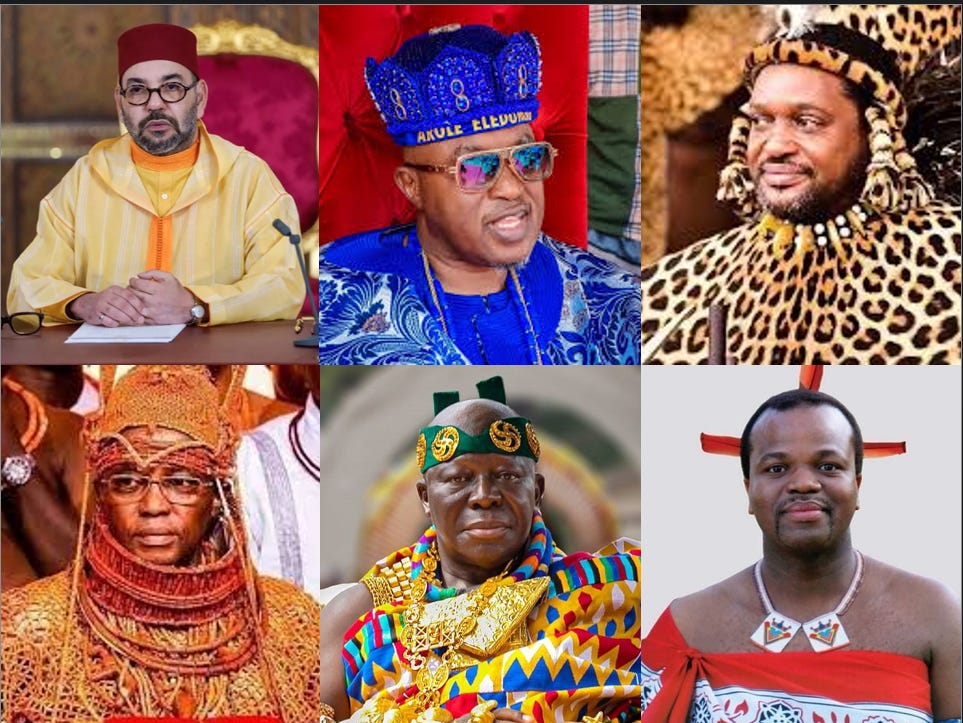
And preservation begins with education. Make reforms to educate their people to understand the tactics used by past and present oppressors, and to guide them toward reclaiming and embracing the true culture and identity our ancestors left for us. Make laws the ensure that our culture is not lost. Enforce them, for it is your sworn duty and you have all the powers and support of the people to do it.